
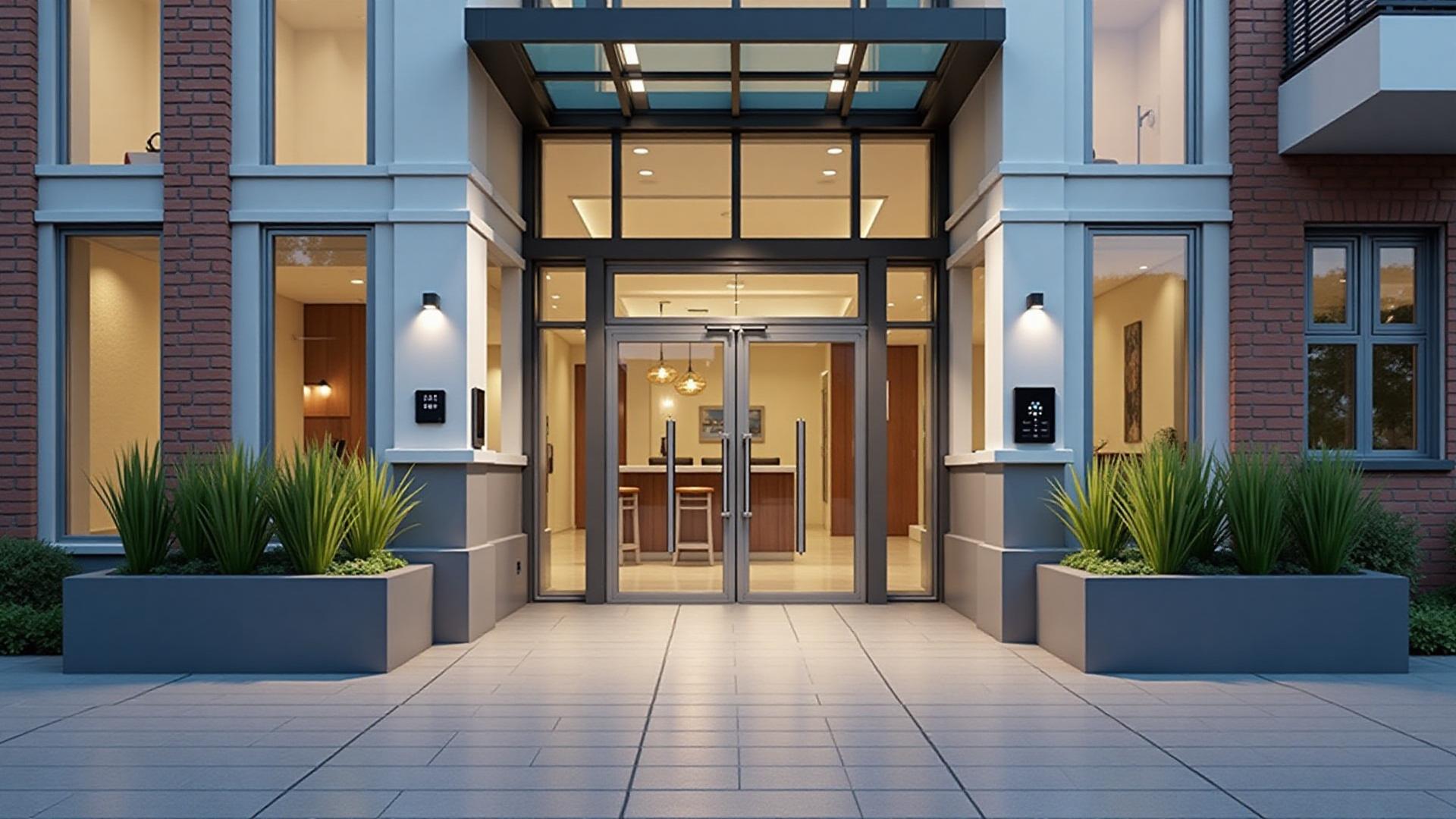
Modern Access Control Systems for Multifamily Properties: A Complete Guide
The multifamily housing industry faces a unique security challenge: balancing robust access control with resident convenience across dozens or hundreds of units. Traditional lock-and-key systems no longer meet the demands of modern apartment communities, where residents expect seamless access, property managers require operational visibility, and owners seek both security and value creation.
Modern access control systems for multifamily properties represent a fundamental shift in how communities manage security, resident access, and property operations. These intelligent platforms deliver measurable benefits across security, operations, and resident satisfaction while creating tangible ROI through reduced costs and increased property values.
The Evolution of Multifamily Access Control
Traditional multifamily security relied on physical keys, which created significant operational challenges:
The Problems with Traditional Keys
- Unrestricted Copying: Residents can duplicate keys without property knowledge, compromising security
- Lost Key Costs: Each lost key requires rekeying, costing $75-150 per occurrence
- Turnover Delays: Physical rekeying between residents creates unit downtime and labor costs
- No Access Audit Trail: Impossible to determine who accessed which areas at what times
- Guest Management Challenges: No efficient way to provide temporary access for maintenance, guests, or deliveries
- Emergency Response Delays: First responders must wait for key retrieval during emergencies
The Modern Access Control Advantage
Cloud-based access control systems eliminate these challenges while adding capabilities that transform property operations. Modern systems provide electronic credentials, real-time management, comprehensive audit trails, and integration with property management software—creating a unified platform for security and operations.
Core Components of Multifamily Access Control
Main Entry Access Control
Building entrances serve as the first security layer, featuring:
- Video Intercom Systems: Residents can screen and grant access to visitors from their smartphones
- Multi-Factor Authentication: Combination of key fobs, PIN codes, and mobile credentials
- Delivery Management: Temporary codes for package carriers with time-restricted access
- Integration with Video Surveillance: Automatic video capture of all entry events
- ADA Compliance: Accessible entry systems meeting federal requirements
Amenity Space Access
Fitness centers, pools, business centers, and clubhouses require controlled access:
- Time-Based Restrictions: Automatic enforcement of amenity hours
- Occupancy Monitoring: Track usage patterns and prevent overcrowding
- Resident-Only Access: Prevent unauthorized amenity use
- Usage Analytics: Understand amenity utilization for planning and renovations
Parking and Garage Access
Parking facilities demand specialized access control:
- License Plate Recognition: Automatic gate opening for registered vehicles
- Visitor Parking Management: Temporary parking access with expiration
- Reserved Space Enforcement: Identify unauthorized vehicles in assigned spots
- Integration with Parking Apps: Digital parking pass management
Unit-Level Access
Electronic locks on individual units complete the access control ecosystem:
- Wireless Smart Locks: Retrofit existing doors without running new wiring
- Remote Access Granting: Provide maintenance access without physical key exchange
- Automatic Credential Updates: Lock codes change instantly upon move-out
- Guest Access Management: Residents can grant time-limited access to guests
- Emergency Override: Property management maintains master access for emergencies
Mobile Credentials: The Future of Resident Access
Modern multifamily access control increasingly relies on mobile credentials, which offer significant advantages over traditional key fobs and cards:
Mobile Credential Benefits
- Always Available: Residents always have their phones, eliminating forgotten fob scenarios
- Instant Provisioning: New residents receive access immediately via app download
- Zero Replacement Cost: Lost credentials are remotely deactivated and reissued instantly
- Enhanced Security: Mobile credentials use encrypted Bluetooth and NFC technology
- Guest Management: Residents can share temporary access with friends, family, or service providers
- Hands-Free Entry: Auto-unlock capabilities based on proximity
Implementation Considerations
Successful mobile credential deployment requires addressing smartphone penetration, providing alternative access methods for non-smartphone users, ensuring reliable Bluetooth connectivity, and offering comprehensive resident training and support.
Integration with Property Management Systems
The true power of modern access control emerges through integration with property management software:
Automated Workflows
- Move-In/Move-Out Automation: Access credentials automatically activate upon lease start and deactivate upon move-out
- Lease Renewal Integration: Access extends automatically with lease renewals
- Payment Status Enforcement: Optional access restriction for delinquent accounts (subject to local laws)
- Maintenance Request Coordination: Temporary access codes generated with work order creation
Operational Efficiency
Integration eliminates duplicate data entry, provides single-platform management, enables real-time occupancy reporting, and generates comprehensive security and access analytics—all while reducing property management labor requirements.
Security and Compliance Considerations
Data Privacy and Storage
Modern access control systems collect significant resident data, creating important privacy considerations:
- Encrypted Data Storage: Access logs and credentials must be encrypted both in transit and at rest
- Privacy Policy Compliance: Clear disclosure of data collection, usage, and retention policies
- Limited Log Retention: Establish reasonable timeframes for access log storage
- Resident Access to Data: Provide residents access to their own access history
Fair Housing Compliance
Access control systems must not create disparate impact on protected classes. Ensure systems accommodate residents with disabilities, provide alternative access methods for those without smartphones, and avoid discriminatory access policies or enforcement.
Emergency Access and First Responder Integration
Life safety requires special consideration:
- Knox Box Integration: Provide first responder master keys in secure lockboxes
- Fire Alarm Integration: Automatic door unlocking during fire alarms
- Emergency Lockdown Capability: Instant facility-wide lockdown for active threats
- Power Failure Failsafe: Battery backup and manual override capabilities
ROI and Financial Impact
Cost Reduction Metrics
Modern access control delivers measurable cost savings:
- Rekeying Elimination: Save $75-150 per turnover by eliminating physical rekeying
- Lost Key Costs: Eliminate $50-100 per lost key event
- Labor Reduction: Reduce staff time spent on key management by 60-80%
- Maintenance Efficiency: Cut maintenance entry coordination time by 40-60%
- Security Incident Reduction: Decrease unauthorized access incidents by 70-85%
Revenue and Value Enhancement
Beyond cost savings, access control creates revenue opportunities:
- Premium Positioning: Modern access control positions properties as Class A amenities
- Reduced Vacancy: Enhanced security and convenience improve lease renewal rates by 5-10%
- Faster Lease-Up: Properties with modern access control lease 15-25% faster
- Property Valuation: Comprehensive security systems add 2-4% to property values
- Insurance Premium Reduction: Some insurers offer 5-15% premium reductions for electronic access control
Typical Investment and Payback
For a 200-unit property:
- Initial Investment: $100,000-175,000 (including installation)
- Monthly Service Fees: $3-7 per door
- Annual Savings: $35,000-55,000 (labor, rekeying, incidents)
- Payback Period: 24-36 months
- 10-Year ROI: 250-400%
Implementation Best Practices
Phased Deployment Strategy
Successful implementation follows a strategic approach:
Phase 1: Common Areas (Months 1-2)
- Deploy building entry systems and video intercoms
- Install parking and amenity access control
- Establish cloud platform and integrations
- Train property management staff
Phase 2: Vacant Units (Months 2-3)
- Install smart locks on available units during turnover
- Test unit-level systems with new move-ins
- Gather resident feedback and adjust processes
Phase 3: Occupied Units (Months 3-12)
- Schedule installations during natural turnover
- Offer voluntary early installation for current residents
- Provide comprehensive resident training and support
- Phase out physical keys as units convert
Resident Communication and Training
Change management drives adoption success:
- Pre-Launch Communications: Explain benefits, timelines, and what to expect
- Multiple Training Channels: In-person sessions, video tutorials, written guides
- On-Site Support: Staff available during initial rollout to assist residents
- Ongoing Resources: Dedicated support email, phone line, and FAQ documentation
- Champions Program: Identify early adopters to help peer support
Selecting the Right Access Control Platform
Key Selection Criteria
Evaluating access control systems requires assessing multiple dimensions:
- Cloud vs. On-Premise: Cloud systems offer lower upfront costs, automatic updates, and remote management
- Scalability: System must accommodate future property portfolio expansion
- Integration Capabilities: Verify compatibility with existing property management software
- Mobile Credential Support: Both iOS and Android support with offline capability
- API Access: Open APIs enable custom integrations and future flexibility
- Vendor Stability: Evaluate company financial health and industry track record
- Support and Training: Comprehensive training programs and responsive support
Common Platform Features to Evaluate
- User-friendly management interface for property staff
- Resident self-service portal for guest access management
- Comprehensive access reporting and analytics
- Scheduled access permissions and temporary credentials
- Role-based permissions for property staff
- Automated backup and disaster recovery
- SOC 2 Type II certification for security compliance
Future Trends in Multifamily Access Control
Artificial Intelligence and Predictive Analytics
AI is transforming access control beyond simple authentication:
- Behavioral Pattern Recognition: Identify unusual access patterns that may indicate security concerns
- Predictive Maintenance: Forecast hardware failures before they occur
- Occupancy Optimization: Analyze usage patterns to optimize amenity scheduling
- Automated Threat Detection: Flag suspicious access attempts or tailgating events
Biometric Integration
While still emerging, biometric authentication offers potential advantages:
- Facial recognition for touchless building entry
- Fingerprint authentication for high-security areas
- Privacy considerations and resident acceptance challenges
- Regulatory compliance requirements varying by jurisdiction
Smart Home Integration
Access control increasingly integrates with broader smart home ecosystems:
- Automatic climate control adjustment upon resident arrival
- Lighting and blind control integration with access events
- Voice assistant integration for guest access management
- Package delivery verification and tracking
Conclusion
Modern access control systems have evolved from simple security tools to comprehensive platforms that enhance resident experience, streamline property operations, and create measurable financial returns. For multifamily properties, the question is no longer whether to implement electronic access control, but how quickly to deploy these systems to capture competitive advantages.
The combination of improved security, operational efficiency, resident satisfaction, and financial ROI makes access control one of the most strategic investments multifamily owners and operators can make. Properties that delay implementation risk competitive disadvantage as resident expectations continue rising and modern access control becomes standard rather than premium.
For Texas multifamily properties evaluating access control systems, partnering with experienced integrators who understand both the technology and the unique operational requirements of apartment communities ensures successful deployment. The right system, properly implemented, transforms property operations while delivering quantifiable returns that compound over time.
Contact our multifamily access control specialists to schedule a property assessment and discover how modern access control systems can enhance security, improve operations, and increase property value for your community.
Stay Updated
Get the latest insights on smart building technology, security systems, and industry trends delivered to your inbox.
Related security services
Explore how EIG PRO designs, installs and services these systems across Texas.
Security & Surveillance Systems
Access control, CCTV, intercom and monitoring designed and installed by one licensed contractor.
Learn moreAccess Control in Dallas
Card readers, mobile credentials and door hardware coordination for Dallas properties.
Learn moreSecurity Systems in Fort Worth
CCTV, LPR and gate integration for Fort Worth commercial and mixed-use buildings.
Learn moreSecurity Systems in Plano
Multifamily access control, package room and amenity surveillance across Plano.
Learn moreStructured Cabling
The Category and fiber backbone every camera and reader depends on.
Learn moreNetwork Infrastructure
PoE switching, VLANs and UPS sizing so your security system stays online.
Learn moreContinue Reading
Explore more insights and expertise from EIG PRO
Technology Planning for Build-to-Rent, Senior Living & Assisted Living Communities
A practical guide to cabling, Wi-Fi, access control, gates, surveillance, amenity AV, and emergency communications for BTR, rental, and senior-living communities.

Leading the Charge: How EIG PRO Is Powering Texas Multifamily, Hotels, and Hospitality
From Dallas high-rises to resort-style hospitality projects across DFW, EIG PRO is setting the standard for low-voltage, security, and connected-building technology in Texas. Here is how we are leading the charge in 2026.
Structured Cabling in Dallas: The Multifamily Developer’s Low-Voltage Playbook (2026)
A DFW-specific structured cabling playbook for multifamily developers — per-unit scope, MDF/IDF design, Texas licensing, 2026 smart-apartment stack, and bid red flags.
Get a free security consultation
Access control, CCTV and networking guidance from a licensed Texas low-voltage contractor. No pressure, no obligation.