
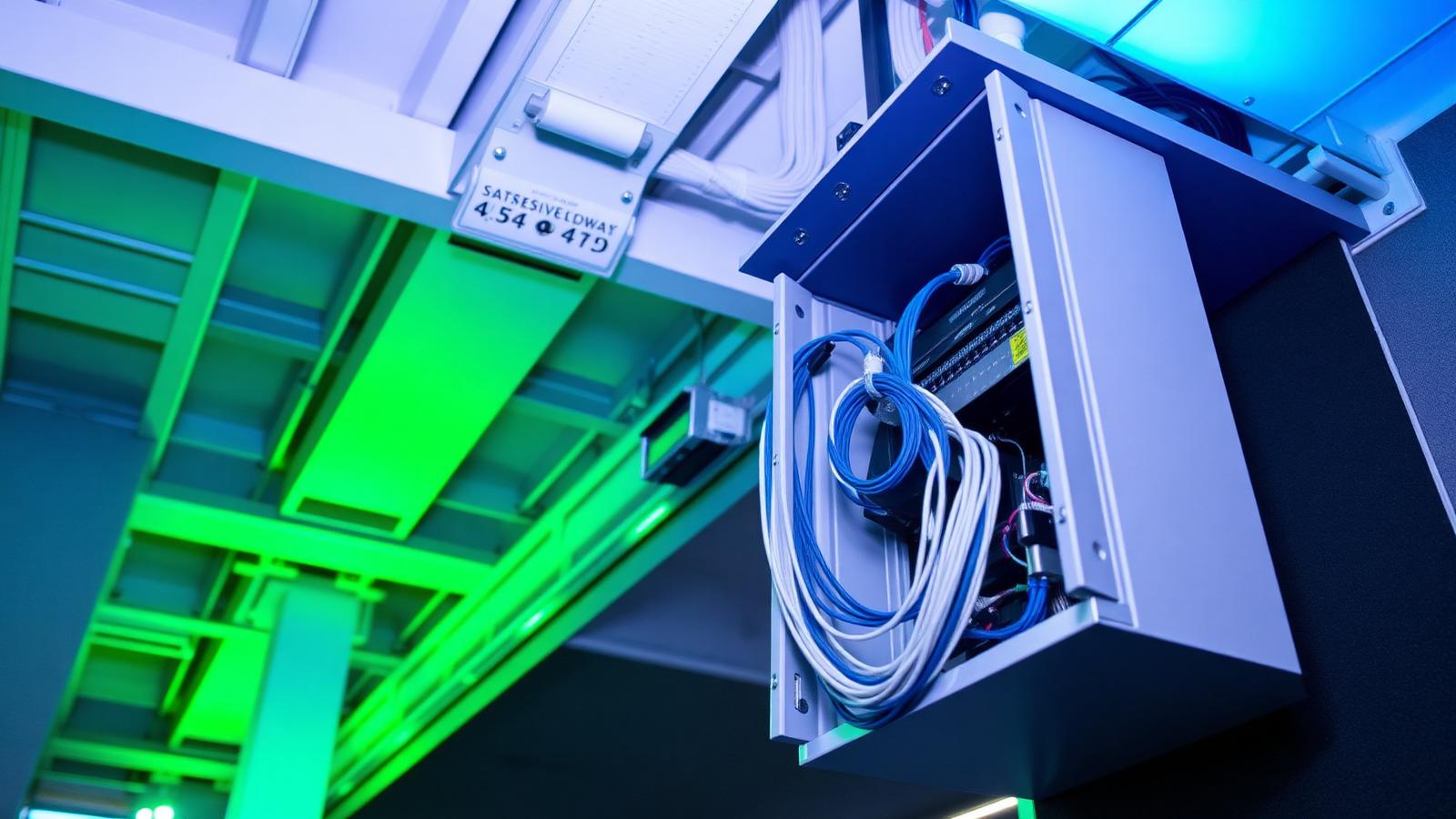
The T in MEPT: What the Technology Trade Means in Modern Construction
What Does MEPT Stand For?
For decades, general contractors bundled three core building systems under the acronym MEP: Mechanical, Electrical, and Plumbing. Then buildings got smart. Access control, structured cabling, IP surveillance, wireless networks, distributed antenna systems, audio-visual, building automation, and IoT sensors all fought for pathway space, budget lines, and coordination hours that no one had planned for.
The industry answered by adding a fourth letter: T for Technology. That's how MEPT was born — Mechanical, Electrical, Plumbing, Technology. Some markets call it the low-voltage trade, some spec it under CSI Divisions 27 and 28, and some just say "the T guys." Whatever the label, the T trade is now as load-bearing to a modern building as its ductwork or its conduit.
What the "T" Covers in Modern Construction
The Technology trade is an umbrella scope. On a typical commercial or multifamily project, EIG PRO and other qualified T contractors deliver:
- Structured cabling — Cat6/Cat6A copper, single-mode and multi-mode fiber, backbone risers, IDF/MDF build-outs, TIA-568 compliant labeling and testing.
- Commercial audio-visual (AV) — conference rooms, boardrooms, digital signage, background music, paging, and control systems.
- Physical security — access control (card, mobile credential, biometric), IP video surveillance, intrusion detection, intercoms, and Texas-specific Area of Refuge emergency communication systems.
- Networking — enterprise Wi-Fi design, switching, routing, VLAN segmentation, and cloud-managed platforms like Meraki, Ubiquiti, and Aruba.
- Distributed Antenna Systems (DAS) — cellular signal boosting and public safety BDA/ERRCS systems required by fire code in many jurisdictions.
- Smart building & IoT — occupancy sensors, lighting control integration, BMS/BAS low-voltage tie-ins, and building automation cabling.
- MDU technology packages — smart apartments, package rooms, EV-charging communications, community Wi-Fi, and pool-area emergency phones (a Texas code requirement).
If it runs on less than 100 volts and moves data, video, audio, or a signal, it lives in the T scope.
Why General Contractors Now Bundle Technology with MEP
Twenty years ago the "IT guy" showed up after drywall and fished cable through finished ceilings. That model is dead. Here's why smart GCs now award Technology as its own prime scope, alongside Mechanical, Electrical, and Plumbing:
- Coordination. Cable trays, conduit sleeves, and back-boxes need to be on the drawings before the concrete pour — not discovered during rough-in.
- BIM clash detection. Modeling low-voltage pathways alongside ductwork and sprinkler mains prevents the classic "the fiber backbone doesn't fit above the ceiling" surprise.
- Single-point accountability. One contractor owns cabling, terminations, network config, and camera commissioning — no more finger-pointing between the electrician and the "AV guy."
- Prewire timing. Speakers, sensors, and access-control back-boxes must be installed before insulation and drywall. A late T award means rework, patching, and change orders.
- Owner experience. Building tenants judge a Class A office or a luxury multifamily community on Wi-Fi speed, access-control reliability, and how fast the AV works. The T trade is the tenant-facing trade.
The Technology Trade on a Real Project Timeline
Here's how the T scope integrates into a construction schedule — the same phasing EIG PRO uses on projects like Highland Oaks, The Linden, and The Meacham:
- Design-Assist (Pre-construction): Review MEP drawings, mark up pathways, spec IDF room sizing, coordinate power and cooling needs with the electrical and mechanical engineers.
- Rough-In (Framing → Insulation): Install back-boxes, mud rings, conduit sleeves, cable trays, and open-cable pathways. Pull backbone fiber and copper risers between IDFs.
- Trim-Out (Post-drywall): Terminate jacks, mount access points, install cameras, cardreaders, speakers, TVs, and control panels. Label everything per TIA-606.
- Commissioning (Punch-list phase): Certify every cable, program the network, enroll credentials, tune the AV DSP, integrate with the building management system, and hand owners a closeout package (test reports, warranty documents, as-builts, and training).
Skip any one of these phases and the T scope collapses into rework.
Common Pitfalls When Technology Is an Afterthought
We've walked onto more than one project where the T trade was bid late and treated as a change order. The typical damage:
- Pathway conflicts — no cable tray installed because it wasn't in the electrical scope, forcing surface-mount raceway that owners hate.
- Under-sized IDF rooms — 4x6 closets that can't hold a full 45U rack, patch fields, UPS, and switch stack with proper cooling.
- Missed low-voltage permits — many Texas municipalities require a separate low-voltage license (like our TX License #B28642601) and permit; getting caught mid-project delays inspection.
- AV/lighting/shade fights — three separate control systems that don't talk, because no one designated a master integrator up front.
- Warranty gaps — mixed-vendor installations where no single party warranties the end-to-end system.
How to Spec the T Trade Correctly (RFP Checklist)
Copy this into your next MEPT bid package to make sure the Technology scope isn't a black box:
- Reference CSI Division 27 (Communications) and Division 28 (Electronic Safety & Security).
- Require BICSI RCDD or equivalent design credentials on the bidder's team.
- Require certified test reports (Fluke DSX or equivalent) for every terminated cable.
- Specify manufacturer certification for major systems (Cisco, Meraki, Genetec, Avigilon, Crestron, QSC, etc.).
- Require a structured cabling manufacturer warranty (20–25 years is standard).
- Include BIM/Revit modeling for pathway coordination as a deliverable.
- Require a commissioning plan and owner training as line items, not optional add-alternates.
- Ask for as-builts, labeling schedules, and credential handoff at closeout.
Why EIG PRO Is Built for the T Trade
EIG PRO is a licensed Texas Technology contractor (TX License #B28642601) that has delivered $10M+ in structured cabling, AV, security, and networking scopes across multifamily, hospitality, commercial, industrial, and educational projects. We back our workmanship with a one-year warranty, pass through full manufacturer warranties — including extended channel warranties (up to 25 years) on select premium structured cabling systems — and provide single-point accountability across integrated systems.
We work as the T in MEPT on design-build, design-assist, and hard-bid projects — coordinating directly with the mechanical, electrical, and plumbing primes so the Technology scope shows up on the drawings, in the BIM model, and on the schedule from day one.
Learn more about our structured cabling, commercial AV, security, and networking service lines, or explore our full design-build approach for commercial and multifamily projects.
Ready to add a real Technology contractor to your MEPT team? Contact EIG PRO or call 877-344-7764 for a scope walkthrough on your next project.
Frequently Asked Questions
What does the T in MEPT stand for?
The T stands for Technology — the low-voltage trade that covers structured cabling, audio-visual, physical security, networking, and building automation. It was added to the traditional MEP (Mechanical, Electrical, Plumbing) acronym as smart-building systems became a required scope on modern commercial and multifamily construction.
Is the technology trade the same as low-voltage?
Effectively yes. "Low-voltage," "the T trade," "communications," and CSI Divisions 27 & 28 all describe the same scope on a construction project: systems that run under 100 volts and move data, video, audio, or a control signal.
Why do general contractors bundle Technology with MEP now?
Because low-voltage systems require coordinated pathways with mechanical ductwork, electrical conduit, and plumbing risers. Bundling Technology as a prime trade forces early coordination, prevents BIM clashes, and gives owners a single warranty for the entire smart-building stack.
Does the T trade need its own permit?
In many Texas jurisdictions, yes — low-voltage work requires a separate license (like EIG PRO's TX License #B28642601) and a low-voltage permit. Some cities also require sub-permits for fire alarm, access control, and DAS.
Can EIG PRO act as the T contractor on a design-build project?
Yes. EIG PRO regularly works as the Technology prime on design-build and design-assist projects, coordinating with mechanical, electrical, plumbing, and structural teams from schematic design through commissioning and closeout.
Stay Updated
Get the latest insights on smart building technology, security systems, and industry trends delivered to your inbox.
Related services
Explore the services behind this work.
Commercial AV
Conference rooms, digital signage and amenity audio across Texas.
Learn moreStructured Cabling
Category and fiber infrastructure built to standard and documented.
Learn moreSecurity & Surveillance
Access control, CCTV and intercom for commercial and multifamily.
Learn moreNetwork Infrastructure
Switching, Wi-Fi and MDF/IDF design that holds up under load.
Learn moreContinue Reading
Explore more insights and expertise from EIG PRO
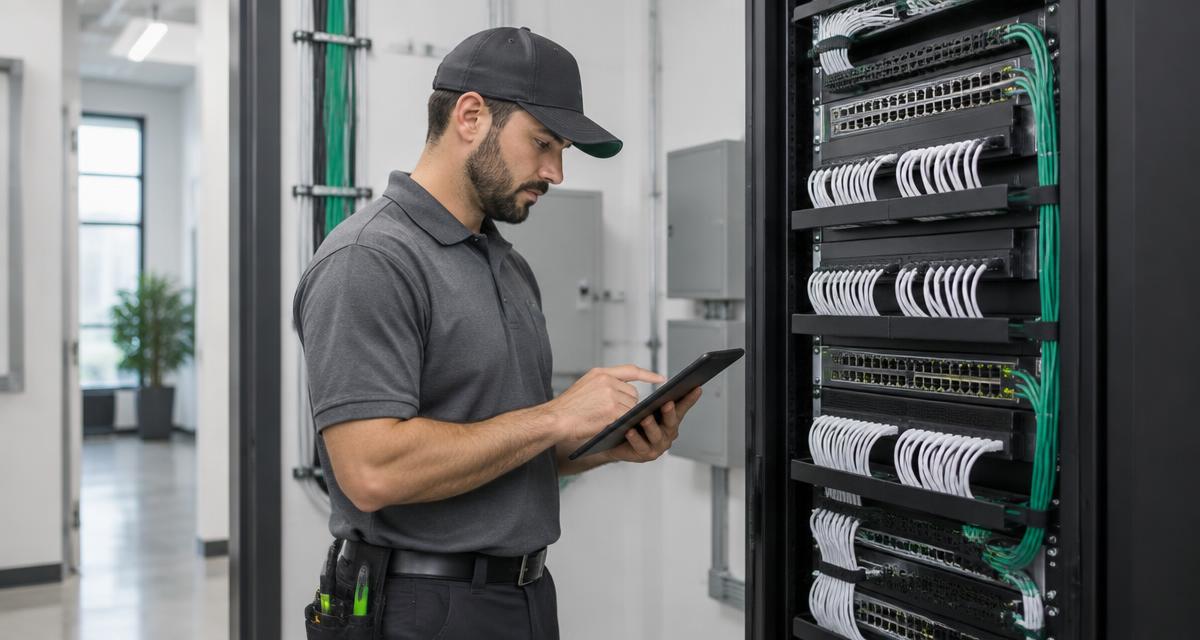
How to Contact EIG PRO Support: Help Desk, Project Support & Service Plans
Learn how to contact EIG PRO support, use our help desk, and get help before design, during installation, and after turnover. Compare Monitoring, Protection, and Full Protection plans.
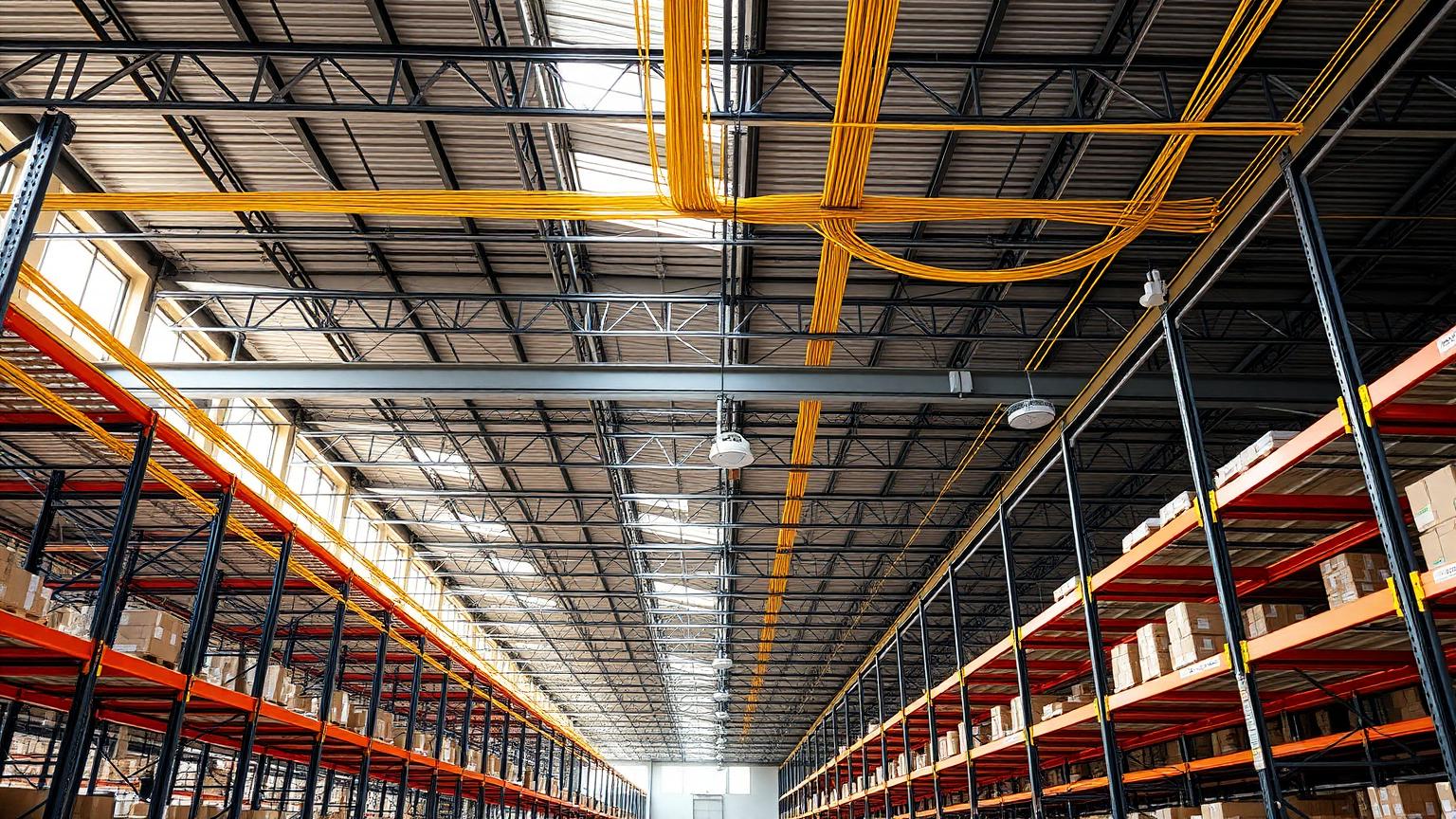
Warehouse & Distribution Center Technology in DFW: Fiber, Wi-Fi, and CCTV That Scale
A practical guide to low-voltage infrastructure for DFW warehouses and distribution centers — fiber backbones, warehouse Wi-Fi design, CCTV coverage, and the compliance layer national tenants require.
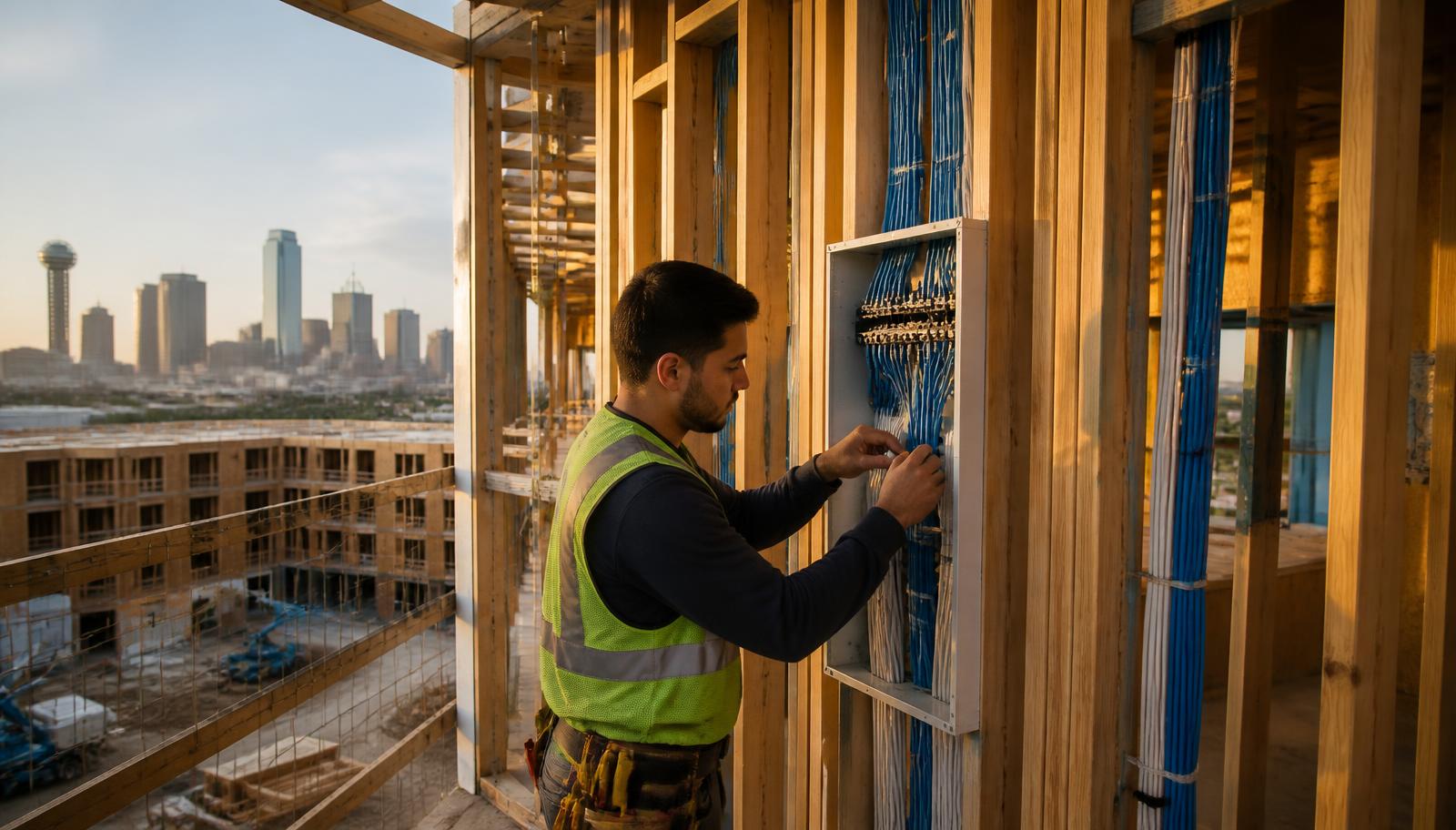
Low-Voltage Cost Per Door: A 2026 Budget Guide for Texas Multifamily Developers
Per-door low-voltage pricing is a sanity check, not a scope. Here is the three-bucket framework EIG PRO uses to build defensible Division 27/28 budgets for Texas multifamily projects in 2026 — and the five misses that blow them up.
Get a free security consultation
Access control, CCTV and networking guidance from a licensed Texas low-voltage contractor. No pressure, no obligation.